
GST E-Invoicing 2025-26: From Compliance to Competitive Advantage
Introduction
Is your business ready for the next GST revolution? Why e-invoicing is not just a compliance task but a competitive advantage.
Every time the GST landscape shifts, businesses scramble to adapt while competitors leverage change to strengthen operations. But is GST e-invoicing merely another compliance requirement or a strategic tool that could redefine your billing, cash-flow, and tax reporting process? The answer lies not just in generating digital invoices; it is in how your systems, processes and technology responses match this digital transition.
In this comprehensive guide, we break down the latest e-invoicing rules for 2025-26, explain the new compliance requirements, and demonstrate how businesses can transform this regulatory mandate into a operational advantage.
What Is GST E-Invoicing? A Quick Primer
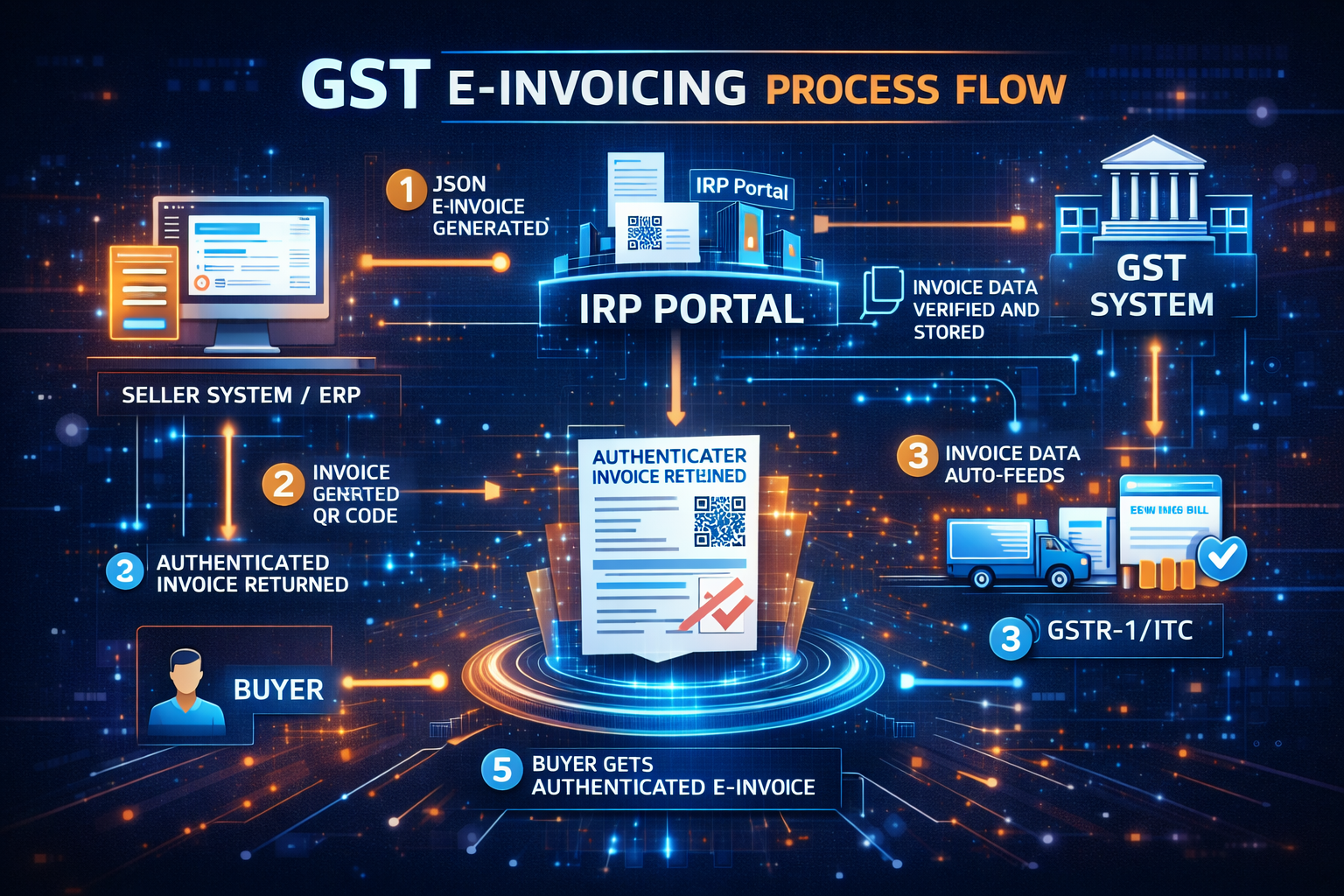
GST e-invoicing refers to the real-time reporting of invoices to the government's Invoice Registration Portal (IRP), which validates each invoice and generates a unique Invoice Reference Number (IRN) along with a digitally signed QR code. This authenticated invoice becomes legally valid only after IRP confirmation.
Unlike traditional manual invoicing, e-invoice data is automatically shared with GST returns, reducing duplication and reconciliation issues and ensuring better transparency with tax authorities. It is important to note that e-invoicing does not mean generating invoices on the government portal; rather, it involves reporting already generated invoices to the IRP for validation and authentication.
Latest Rules and Mandatory Implementation (2025-26 Updates)
The e-invoicing framework, originally introduced in phases since 2020, has significantly expanded in 2025 with stricter compliance requirements and enhanced security measures.
1. E-Invoicing Thresholds and Reporting Deadlines
- E-invoicing is mandatory for businesses with Annual Aggregate Turnover (AATO) above Rs. 5 crore for B2B transactions
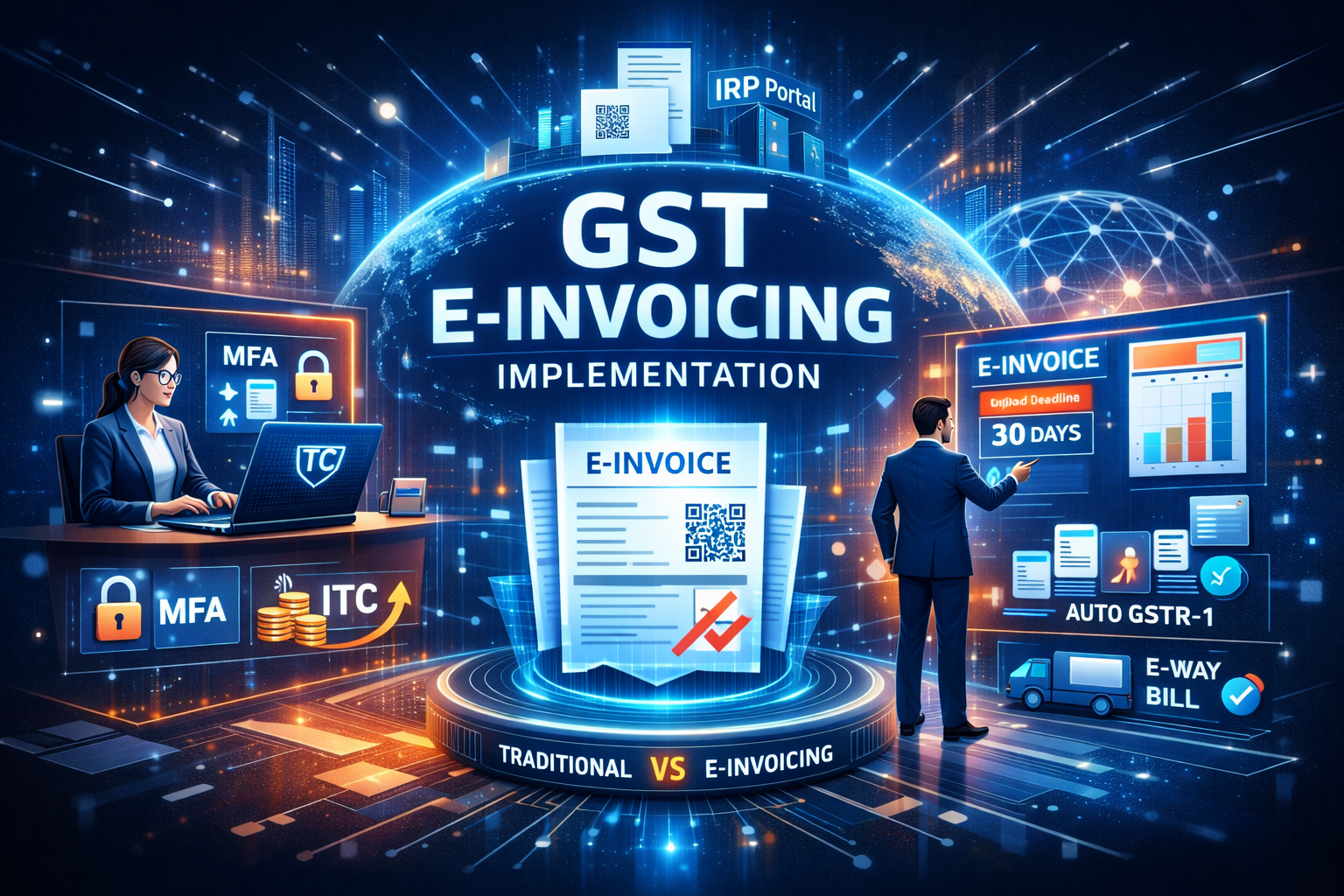
- From April 1, 2025, businesses with AATO above Rs. 10 crore must upload e-invoices within 30 days of invoice date
Critical Deadline: An invoice dated April 1, 2025 must be reported on the IRP by April 30, 2025. Failure to comply may result in rejection and jeopardize Input Tax Credit (ITC) claims.
2. Security Enhancements: Multi-Factor Authentication (MFA)
To strengthen access security, MFA has been made mandatory for all taxpayers from April 1, 2025. This means login requires user credentials, mobile or Sandes app OTP, and account verification. This extra layer helps prevent unauthorized access, crucial for large businesses and MSMEs alike.
3. Invoice Number Standardization
From June 1, 2025, IRP treats invoice numbers as case-insensitive, converting them to uppercase to avoid duplicates and mismatches during IRN generation.
Comparison: E-Invoice vs Traditional Invoicing
| Feature | Traditional Invoicing | E-Invoicing (GST IRP) |
|---|---|---|
| Generation Process | Manual, often offline | Digital, real-time reporting to IRP |
| GST Integration | Manual GSTR-1 upload | Auto-populates GSTR-1 and logistics systems |
| Error Handling | High risk of human errors | Reduced errors due to validation |
| Tax Audit / Compliance | Fragmented visibility | Real-time visibility to authorities |
| Cash Flow Impact | Delays in ITC | Faster ITC reflection due to real-time reporting |
Benefits of Implementing E-Invoicing
1. Enhanced Accuracy and Reduced Errors
E-invoices are digitally validated against prescribed fields before validation, reducing mismatches and errors that often plague manual systems. The standardized format ensures consistency across all business documents.
2. Faster Input Tax Credit (ITC)
With real-time reporting and seamless integration with GST returns, buyers can claim ITC faster as their inward supplies update automatically in GSTR returns. This improves cash flow and working capital management.
3. Lower Tax Evasion and Fraud Prevention
Authentic, IRP-generated invoices close loopholes that once allowed fake invoicing or misreporting, directly helping curb tax evasion. The unique IRN ensures every invoice is traceable and verifiable.
4. Integration with E-Way Bill and GSTR-1
E-invoice data auto-feeds into e-way bills and GSTR-1, cutting down duplication, manual entry, and reconciliation efforts. This integration streamlines logistics and compliance processes.
Challenges and Compliance Risks
Though beneficial, e-invoicing comes with specific obligations that businesses must address:
- Strict submission deadlines: Missing the 30-day upload deadline can lead to ITC denial and penalties
- System preparedness: Accounting systems must integrate with GST APIs for seamless reporting
- Training and SOP updates: Finance teams must adapt to new validation checks and MFA requirements
- Penalty exposure: Non-compliance can attract penalties of 100% of tax due or Rs. 10,000 per invoice, whichever is higher
Real-World Examples: Adoption Journey
Case Study A: Company with Rs. 15 Crore Turnover
- Integrated invoicing software with IRP API
- Automated e-invoice generation at the point of billing
- Avoided manual GSTR-1 entries and errors
- Achieved faster ITC claims due to real-time updates
- Result: Improved cash flow and reduced compliance burden
Case Study B: Company with Rs. 7 Crore Turnover
- Relied on traditional invoicing with manual return filing
- Failed to upload invoices before 30-day limit for some sales
- Faced rejection and ITC issues
- Result: Financial losses and strained customer relationships
These contrasting examples emphasize the critical need for technology integration and timely compliance with e-invoicing requirements.
Practical Guidance for Businesses
1. Integrate Accounting Software with IRP
Use ERP or GST-compliant billing tools to generate JSON e-invoices automatically and submit to the IRP in real time. Ensure your software provider offers IRP API integration.
2. Update Compliance SOPs
Mandate timelines for invoice uploads, assign responsibilities for MFA setup, and audit IRP submissions regularly. Establish internal checkpoints to ensure no invoice exceeds the 30-day window.
3. Train Teams
Ensure sales, accounting, and logistics teams understand the new rules, especially the 30-day limit and MFA requirements. Regular training sessions help prevent compliance gaps.
4. Monitor Future Changes
GST authorities frequently update thresholds and rules. Regularly review official updates on the GST portal to stay compliant and adapt to new requirements proactively.
Pro Tip: Set up automated alerts within your accounting system to flag invoices approaching the 30-day reporting deadline. This simple step can prevent costly compliance failures.
Conclusion: Why E-Invoicing Is More Than a Requirement
GST e-invoicing has evolved from a compliance checkbox to a strategic tool that boosts accuracy, enhances cash flow, and strengthens tax governance. Businesses that proactively adopt digital invoicing not only avoid compliance pitfalls but also gain operational efficiency and competitive edge in a data-driven tax ecosystem.
The 2025-26 updates, including the 30-day reporting deadline and mandatory MFA, represent a significant shift toward real-time tax governance. While these changes introduce new compliance complexities, they also offer opportunities for businesses to streamline operations and improve financial management.
At AAG & Co., we specialize in GST compliance and technology integration advisory. Our team can help your business navigate these changes, implement robust e-invoicing systems, and transform compliance requirements into operational advantages. Contact us for personalized guidance on optimizing your e-invoicing strategy.

CA Swapnil Agarwal
Specialised in GST compliance, e-invoicing implementation, and regulatory advisory. Our team of Chartered Accountants and tax professionals helps businesses navigate digital tax transformations with precision and strategic insight.